Nine years after release, people often assume the story is over.
Sentence served. Time passed. Lesson learned. Life moved on.
But for millions of justice impacted people, that is not how the system works.
Because while life moves forward, the system never fully lets go.
Long after incarceration ends, long after supervision ends, old cases resurface. Not because of new harm. Not because of new choices. But because unresolved penalties are allowed to linger indefinitely, waiting for the moment someone is stable enough to collect from.
Court fees tied to cases from decades ago do not disappear.
They wait.
They wait until someone is working.
Until someone has rebuilt.
Until someone is visible again.
Then they reappear quietly and without warning, as if time never passed at all.
A recent experience in this area made me realize just how significant the negative impact of this can be. Not only financially, but emotionally and psychologically, especially for people who have spent years doing everything right.
This is the part of the justice system that rarely makes headlines. Punishment without an end date. A system that claims accountability but offers no true closure. A system where compliance does not equal completion.
For people with convictions, freedom is often conditional long after release. Not through supervision, but through financial obligations, civil penalties, and administrative barriers that can surface ten, fifteen, even twenty years later.
This is not about personal responsibility.
It is about structural design.
If someone could not pay decades ago, time does not make payment easier. It simply delays the damage. And when the bill finally comes due, it often lands at the exact moment someone has the most to lose.
That is not justice.
It is deferred punishment.
The result is a cycle where progress becomes a liability. Stability becomes risk. Success becomes the trigger for consequences that were never truly resolved.
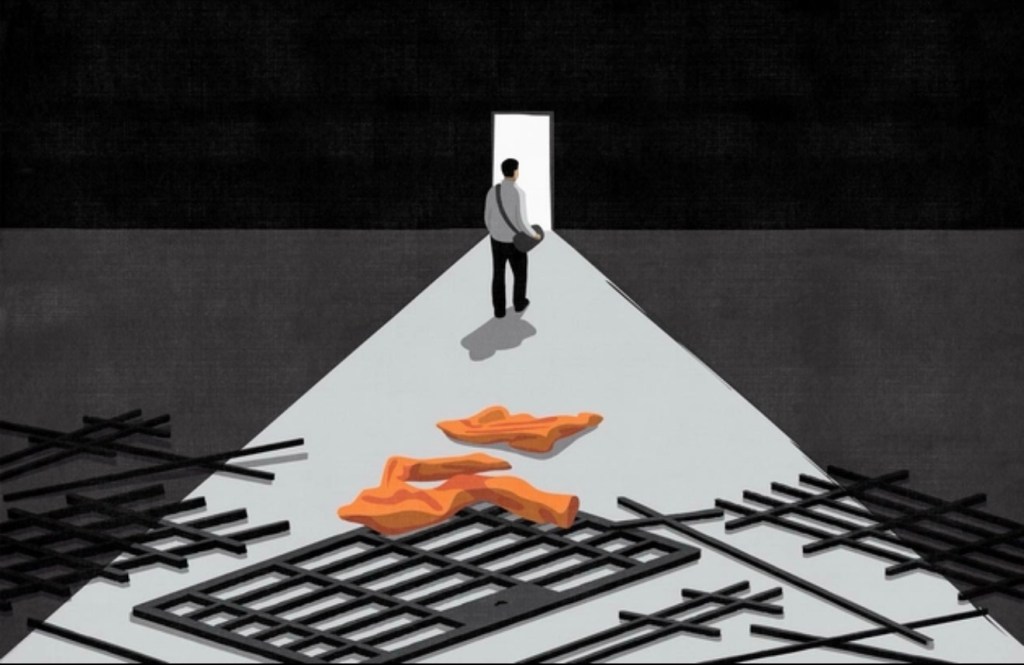
Reentry, in this system, has no finish line. It does not end at release. It does not end at parole. It does not end after five years or nine. For many, it never ends at all.
Life keeps happening for everyone. But for justice impacted people, it happens under the constant possibility that the past will interrupt the present again.
If we want real public safety, real rehabilitation, and real second chances, the system has to learn when to stop punishing. Accountability without closure is not accountability. It is control.
And no one can fully move forward in a system that refuses to let the past stay in the past.
 staceybooks
Leave a comment